How the MCPR Development Kit Accelerates Photodiode System Design
Every multi-cell photodiode program reaches the same checkpoint.
The detector is selected. The optical layout is on paper.
Now the team needs readout electronics that preserve detector-level performance across every channel.
That step is where schedules slip.
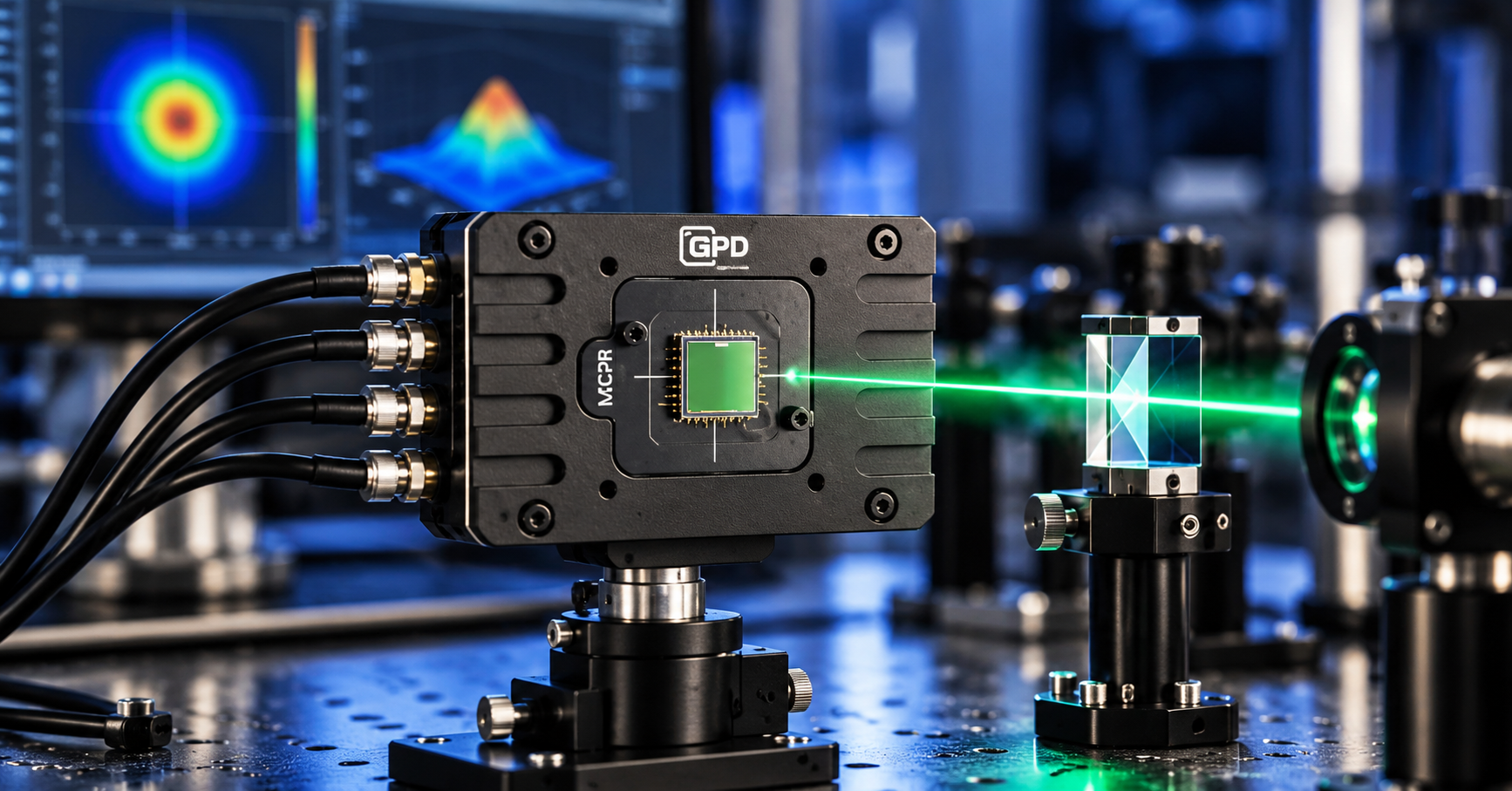
Designing, building and debugging multi-channel transimpedance electronics routinely takes months, all before the first meaningful measurement. The Multi-Cell Photoreceiver (MCPR) Development Kit from GPD Optoelectronics removes that bottleneck. Engineering teams move from concept to actionable data in minutes, with a known-good receiver platform built by the same company that designs the detectors.
The Hidden Cost of Building Readout Electronics From Scratch
A quad-cell or octo-cell photodiode is only as good as the electronics reading it. Building those electronics in-house means taking on a long list of tasks unrelated to the core optical problem:
- Designing low-noise transimpedance amplifiers for each channel
- Laying out boards to control crosstalk and parasitic capacitance
- Shielding sensitive signal paths from interference
- Managing thermal drift across channels
- Matching gain and response channel to channel
Each iteration adds weeks. Worse, early noise problems are hard to diagnose. Teams often spend valuable time unsure whether a result reflects the detector, the electronics or the test setup itself. For an engineering lead, this means delayed milestones. For a program manager, it means budget consumed on infrastructure instead of the actual mission.
What the MCPR Kit Delivers Out of the Box
The MCPR Development Kit packages the hardest part of receiver design into a ready-to-use platform. Each kit includes:
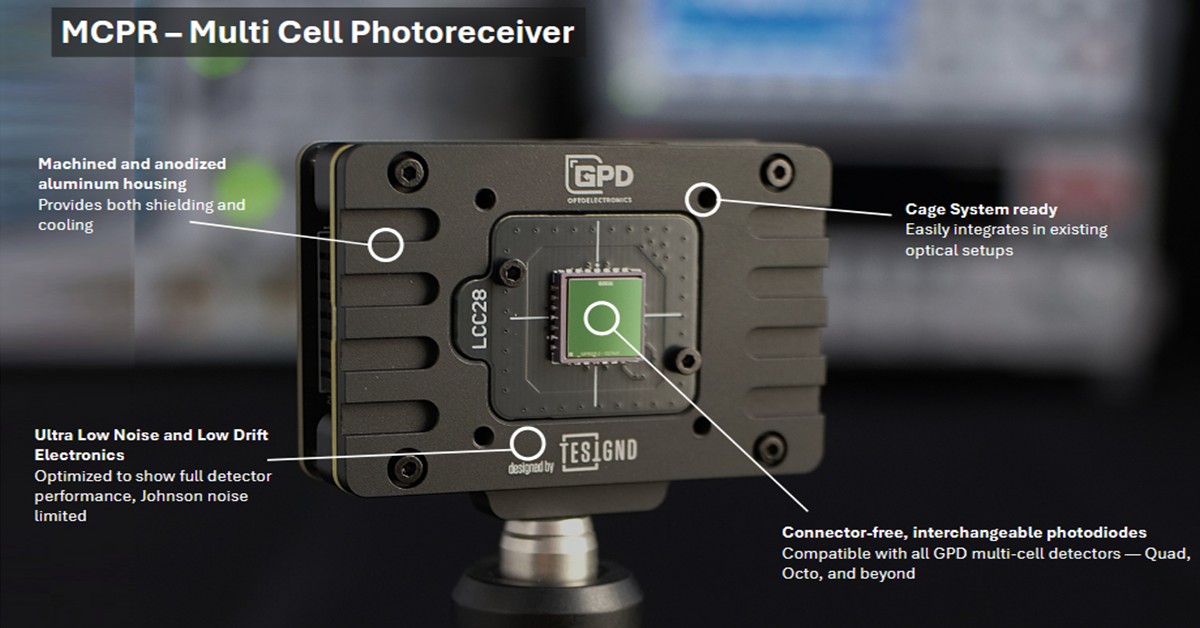
- 8-channel ultra-low-noise transimpedance electronics for simultaneous multi-cell readout
- Connector-free, high-speed photodiode connectivity to preserve signal integrity at the detector
- A shielded, thermally stable, precision-machined housing for consistent measurements
- Compatibility with standard optical cage systems for fast bench integration
- Plug-and-play setup with open signal access for flexible system integration
The result is true detector-level performance immediately, with no complex setup required.
Four Ways the MCPR Kit Shortens the Design Cycle
1. Data in Minutes Instead of Months. The MCPR kit eliminates the electronics development phase. Teams connect the detector, mount the kit and begin collecting real data the same day. As Stuart David, Senior Vice President of Sales and Marketing at GPD Optoelectronics, put it at launch: “Teams shouldn’t spend months building and evaluating electronics before they even get to data.”
2. Lower Integration Risk. A validated receiver platform gives engineers a trusted baseline. Measured noise floors, linearity and crosstalk reflect the detector itself. Engineers can isolate detector behavior with confidence, make informed design decisions earlier and avoid costly surprises late in the program.
3. Drop-In Compatibility With Existing Optical Benches. Cage-system mounts let the MCPR slot directly into existing optical setups. You don’t need to redesign fixtures or build custom mechanical interfaces. The kit fits the lab teams already have.
4. A Clear Path From Evaluation to Field Prototype. Open electronics access lets engineers carry the MCPR beyond the bench. Teams can integrate the kit into existing systems and field prototypes, extending its value well past initial characterization.
What Engineering Teams Evaluate With the MCPR Kit
The MCPR kit supports a wide range of multi-cell detector work, including quadrant and Octo™ photodiode architectures. Common tasks include:
- Characterizing beam profiles, steering and position sensing
- Analyzing polarization
- Evaluating detector linearity, crosstalk and system noise
- Running multi-channel photodiodes for tracking and metrology
- Supporting multi-wavelength detection
- Validating system behavior in real time
These capabilities make the kit a strong fit for space, defense, metrology and free-space optical applications, where detector-level precision drives mission success downstream.
The Business Case for Procurement Teams
For procurement contacts evaluating development tools, the math is straightforward. Compare the cost of the MCPR kit against several months of engineering labor spent designing, prototyping and debugging custom readout electronics. The kit delivers value in several ways:
- Faster time to data, keeping programs on schedule
- Reduced engineering hours spent on non-core infrastructure
- Lower technical risk through a proven, validated platform
- Reusability across multiple programs and detector evaluations
- A single source for both detectors and receiver electronics, reducing vendor handoffs
That last point matters. When the detector supplier also designs the receiver, compatibility questions are answered before you sign the purchase order.
A Systems-Level Partner From Detector to Data
GPD Optoelectronics has designed and manufactured photodetectors in Salem, New Hampshire, since 1973. The company fabricates its quadrant photodiodes and Octo™ photodiodes in-house. The MCPR kit was engineered to bring out the full performance of those detectors. This is the difference between buying a component and gaining a partner. GPD Optoelectronics understands how detectors behave inside complete optical systems. The MCPR kit reflects that knowledge, packaged for immediate use. Programs in regulated sectors will also find the right credentials. GPD Optoelectronics is ISO 9001:2015 registered, ITAR registered with DDTC, CMMC Level 2 certified and NIST SP 800-171 compliant, with testing per MIL-STD-883 and MIL-STD-750.
Start Your Evaluation
Spend your engineering time on the optical problem, not the readout electronics. The MCPR Development Kit gets your team to real data faster with less risk.
- Visit our Multi-Cell Photoreceiver (MCPR) Development Kit Product Page
- Contact GPD Optoelectronics to schedule a demonstration and application review
Bring your optical challenge. GPD Optoelectronics will help you get to flight-ready or field-ready performance sooner.
Multi-Cell Photoreceiver (MCPR) Development Kit
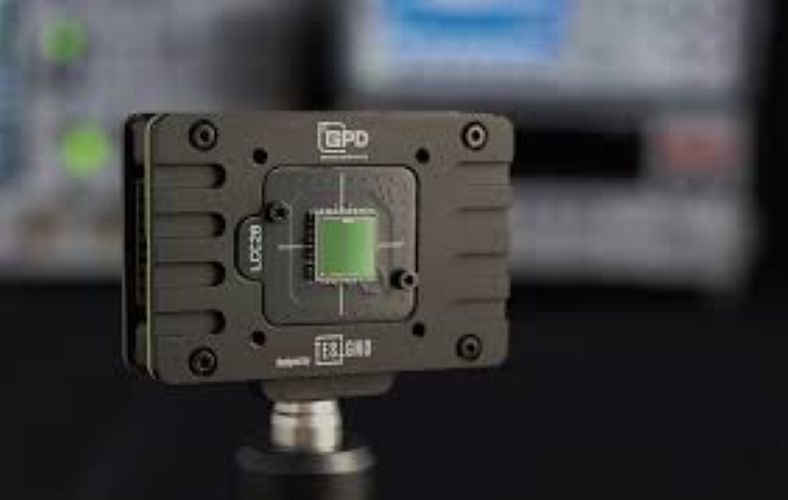
The Multi-Cell Photoreceiver (MCPR) Development Kit from GPD Optoelectronics is a breakthrough platform that accelerates the development and deployment of advanced photodiode systems. Engineered for speed and precision, MCPR integrates 8-channel ultra-low-noise transimpedance electronics with connector-free, high-speed photodiode connectivity, all housed in a rugged, thermally stable enclosure.
https://www.gpd-ir.com/wp-content/uploads/2026/10/How-the-MCPR-Development-Kit-Accelerates-Photodiode-System-Design.png
907
1734
GPD Optoelectronics
https://www.gpd-ir.com/wp-content/uploads/2025/12/GPD-Logo-Transparent.png
GPD Optoelectronics2026-10-27 13:54:542026-10-27 14:12:05How the MCPR Development Kit Accelerates Photodiode System Design https://www.gpd-ir.com/wp-content/uploads/2026/10/Selecting-a-Photodiode-Built-to-Outlast-Your-Aerospace-Mission-Main-Graphic.png
907
1734
GPD Optoelectronics
https://www.gpd-ir.com/wp-content/uploads/2025/12/GPD-Logo-Transparent.png
GPD Optoelectronics2026-10-09 10:30:142026-10-09 11:09:19Selecting a Photodiode Built to Outlast Your Aerospace Mission
 https://www.gpd-ir.com/wp-content/uploads/2026/09/Introducing-What-is-a-Photodiode-A-Complete-Guide-Blog-Post-Graphic.png
907
1733
GPD Optoelectronics
https://www.gpd-ir.com/wp-content/uploads/2025/12/GPD-Logo-Transparent.png
GPD Optoelectronics2026-09-18 16:51:422026-09-18 16:55:15Introducing What is a Photodiode: A Complete Guide
 https://www.gpd-ir.com/wp-content/uploads/2026/08/Picking-the-Right-Photodiode-for-Your-Wavelength-Range.jpg
628
1200
GPD Optoelectronics
https://www.gpd-ir.com/wp-content/uploads/2025/12/GPD-Logo-Transparent.png
GPD Optoelectronics2026-08-28 11:46:432026-10-09 11:08:25Picking the Right Photodiode for Your Wavelength Range
 https://www.gpd-ir.com/wp-content/uploads/2026/07/The-Photonics-Bottleneck-Nobodys-Talking-About-in-the-AI-Buildout-Graphic.jpg
628
1200
GPD Optoelectronics
https://www.gpd-ir.com/wp-content/uploads/2025/12/GPD-Logo-Transparent.png
GPD Optoelectronics2026-07-20 16:26:522026-08-28 11:53:18The Photonics Bottleneck Nobody’s Talking About in the AI Buildout
 https://www.gpd-ir.com/wp-content/uploads/2026/07/Our-New-Photodetector-Selector-Graphic.jpg
628
1200
GPD Optoelectronics
https://www.gpd-ir.com/wp-content/uploads/2025/12/GPD-Logo-Transparent.png
GPD Optoelectronics2026-05-12 18:07:002026-08-28 11:54:39Our New Photodetector Selector: A Powerful Tool for Engineers
 https://www.gpd-ir.com/wp-content/uploads/2026/05/Why-the-Cheapest-Photodetector-Is-Usually-the-Most-Expensive-One.jpg
628
1200
GPD Optoelectronics
https://www.gpd-ir.com/wp-content/uploads/2025/12/GPD-Logo-Transparent.png
GPD Optoelectronics2026-05-06 10:06:182026-05-07 14:03:37Why the Cheapest Photodetector Is Usually the Most Expensive One
 https://www.gpd-ir.com/wp-content/uploads/2026/03/Satellite-2026-Graphic.jpg
628
1200
GPD Optoelectronics
https://www.gpd-ir.com/wp-content/uploads/2025/12/GPD-Logo-Transparent.png
GPD Optoelectronics2026-03-01 19:18:102026-08-17 14:31:58Satellite 2026 in Washington, D.C., March 23-26
 https://www.gpd-ir.com/wp-content/uploads/2026/01/SPIE-Photonics-West-2026.jpg
628
1200
GPD Optoelectronics
https://www.gpd-ir.com/wp-content/uploads/2025/12/GPD-Logo-Transparent.png
GPD Optoelectronics2026-01-22 23:52:102026-04-02 09:24:26Photonics West 2026: San Francisco, January 20-22
 https://www.gpd-ir.com/wp-content/uploads/2025/12/Digikey-Graphic-1.jpg
628
1200
GPD Optoelectronics
https://www.gpd-ir.com/wp-content/uploads/2025/12/GPD-Logo-Transparent.png
GPD Optoelectronics2025-12-19 09:00:212026-08-17 14:42:33GPD Optoelectronics Announces Global Availability of Photodiodes on DigiKey
 https://www.gpd-ir.com/wp-content/uploads/2025/11/GPD-Optoelectronics-Announces-Launch-of-Multi-Cell-Photoreceiver-Development-Kit-Ahead-of-Space-Tech-Expo-Europe-202.jpg
628
1200
GPD Optoelectronics
https://www.gpd-ir.com/wp-content/uploads/2025/12/GPD-Logo-Transparent.png
GPD Optoelectronics2025-11-06 09:00:412026-04-01 16:12:09GPD Optoelectronics Announces Launch of Multi-Cell Photoreceiver Development Kit Ahead of Space Tech Expo Europe 2025
 https://www.gpd-ir.com/wp-content/uploads/2026/03/GPD-Optoelectronics-Corp.-Awarded-14.5M-Contract-to-Advance-Rugged-Optical-Receiver-Technology.jpg
628
1200
GPD Optoelectronics
https://www.gpd-ir.com/wp-content/uploads/2025/12/GPD-Logo-Transparent.png
GPD Optoelectronics2025-10-23 09:05:202026-04-02 09:12:36GPD Optoelectronics Corp. Awarded $14.5M Contract to Advance Rugged Optical Receiver Technology
