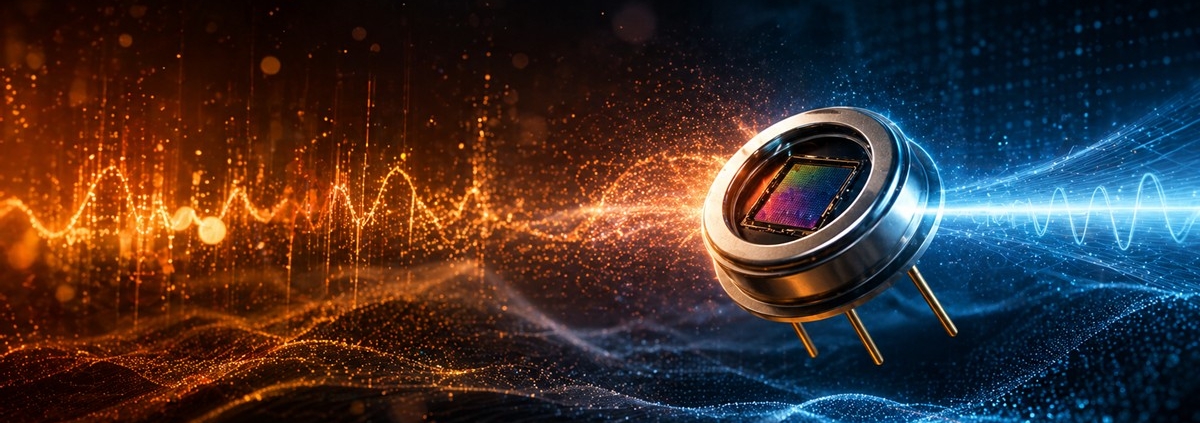

Photodetector Selection is the process of identifying the optimal detector for a given application based on wavelength sensitivity, speed, sensitivity, form factor, and operating environment requirements. Making the wrong choice can compromise system performance, increase noise, or reduce reliability. GPD offers a broad portfolio of photodetectors, including PIN diodes, avalanche photodiodes, and position-sensing detectors across multiple semiconductor materials, and provides application engineering support to help customers match detector parameters to system-level needs efficiently and accurately.

Posts

Selecting a Photodiode Built to Outlast Your Aerospace Mission Main Graphic

Selecting a Photodiode Built to Outlast Your Aerospace Mission

Learn where near-infrared photodiodes fly in aerospace systems, which specs deserve a hard look, and why in-house fabrication, military-standard testing, and lot-level traceability matter for missions that must work the first time.


Introducing What is a Photodiode A Complete Guide Blog Post Graphic

Introducing What is a Photodiode: A Complete Guide

Read the blog post introducing our new What is a Photodiode? A Complete Guide covers operating modes, device types, key specifications, and material systems. Engineers new to detector selection will find a clear and practical starting point, along with links to relevant product pages and selection tools.

Our New Photodetector Selector Graphic

Our New Photodetector Selector: A Powerful Tool for Engineers

Introducing our new interactive Photodetector Selector! Engineers can now navigate detector types, key specs, and real-world trade-offs with confidence. From LiDAR to telecom to spectroscopy, find the right photodetector for your application fast.

Why the Cheapest Photodetector Is Usually the Most Expensive One

Why the Cheapest Photodetector Is Usually the Most Expensive One

Choosing a photodetector isn’t just a spec-matching exercise. The wrong choice drives redesign cycles, calibration overhead, and supplier risk that never appear on a datasheet. Here’s how to evaluate detectors the way your product’s lifecycle actually demands.