Why the Cheapest Photodetector Is Usually the Most Expensive One
Datasheets tell you what a detector can do. The right partnership tells you what your product can do.
Every photodetector selection process starts exactly the same way: an engineer opens a product datasheet. They carefully review the responsivity curves, dark current figures and wavelength ranges, checking each value.
The numbers look right, the price fits the budget, and the photodetector component gets designed in.
Six months later, the product is back on the bench because something the datasheet never mentioned is quietly wrecking the entire system.
That gap, between what a spec sheet promises and what a detector actually costs you, is where most photodetector decisions go wrong.
The Real Cost of Getting It Wrong
Engineers tend to frame detector selection as a cost-per-unit problem. It isn’t. The unit cost is the smallest number in the equation.
Consider what happens when a detector drifts under thermal stress and requires recalibration every few hundred hours. Or when a supplier that hit every delivery target during development suddenly stretches lead times once you’re in volume production. Or when subtle unit-to-unit variance forces rework at the line. None of those costs appear in the original comparison. All of them appear in your margin.
Think of it like a foundation. A few millimeters of variance in a concrete pour sounds negligible until you’re trying to hang a door that won’t close. A detector that’s almost stable, almost consistent, almost right behaves the same way. The problem doesn’t announce itself on day one. It accumulates.
A detector engineered for long-term stability pays dividends across a product’s entire life. Less maintenance, fewer replacements, fewer support calls. The upfront price difference between a mediocre detector and an excellent one rarely survives contact with that math.
A detector that looks cost-effective at first glance can become expensive if it forces system redesigns, requires heavy calibration, or fails prematurely. – Stuart David, Senior Vice President, Global Sales and Marketing.
Signal Quality Is Product Quality
Here is the question every end user of an optical system will keep asking, whether they say it out loud or not: Can I trust this data?
In medical diagnostics, the answer determines whether a clinician acts. In environmental monitoring, it determines whether a contamination event gets caught or missed. In defense and space, it determines whether a system performs when the margin for error is zero. These aren’t abstract stakes. They’re the reason detector performance isn’t a feature to be traded off against cost. It is the product.
If your detector drifts, introduces noise, or loses linearity under real operating conditions, no amount of downstream signal processing can recover what was lost at the source. You can filter, smooth, and compensate. But a bad measurement is still a bad measurement. The only fix is a better detector.
What separates a reliable detector from a liability is stability across temperature and time, high linearity over a wide dynamic range, and signal-to-noise ratios that hold up when light is scarce. Not on the datasheet. In the field, under load, for years.
From Prototype to Production Without the Drama
The prototype-to-production transition is where many programs quietly fall apart. A detector that performs beautifully in the lab becomes inconsistent at higher volumes. A supplier that was responsive during development becomes hard to reach when lead times stretch. Small parameter variances that were tolerable in a pilot run become a rework problem at scale.
The way to avoid this is to think about production before you’re in it. That means working with a manufacturer that operates under rigorous quality systems, can scale from pilot quantities to thousands of units, and provides predictable lead times backed by actual capacity rather than optimistic estimates. U.S.-based manufacturing helps here too: tighter supply chain visibility, fewer import delays, and less exposure to geopolitical disruption. When your schedule is tight, geography matters more than most engineers expect.
Speed to Market Is a Specification Too
Time is a competitive resource, and it compounds. Every week spent iterating on detector integration, waiting on a slow supplier, or reworking a design around a component that almost fits is a week your competitors don’t lose. In fast-moving markets like quantum sensing, autonomous vehicles, and medical wearables, those weeks add up fast.
Rapid prototyping support, early engineering engagement, and short lead times aren’t conveniences. They are the difference between a program that hits its window and one that watches it close. The right detector partner shortens your design loop, not just your bill of materials.
The Partnership Question
There’s a version of this decision that ends with components in a box and a support ticket queue. And there’s a version where your detector supplier’s engineers are reachable when the datasheet runs out: at midnight before a critical test, when a new application requirement forces a design change, when you need to know whether a detector can survive an operating environment nobody has tried before.
The best supplier relationships look less like transactions and more like collaborations. A partner with deep experience across aerospace, space, medical, defense, and industrial applications has seen variations of your problem before, even when your specific application is new. That pattern recognition is worth more than any spec sheet.
A photodetector is a small component with an outsized role. It sets the ceiling on everything built around it. Choose the wrong one, and you spend the rest of the program trying to engineer around a problem that was baked in from the start. Choose the right one, and it disappears into your system, doing its job quietly, reliably, without drama.
That’s what good component selection looks like. That’s what it’s worth pursuing. To learn more, please read: Photodetector Buyer’s Guide: From Specs to System Performance.
Learn More
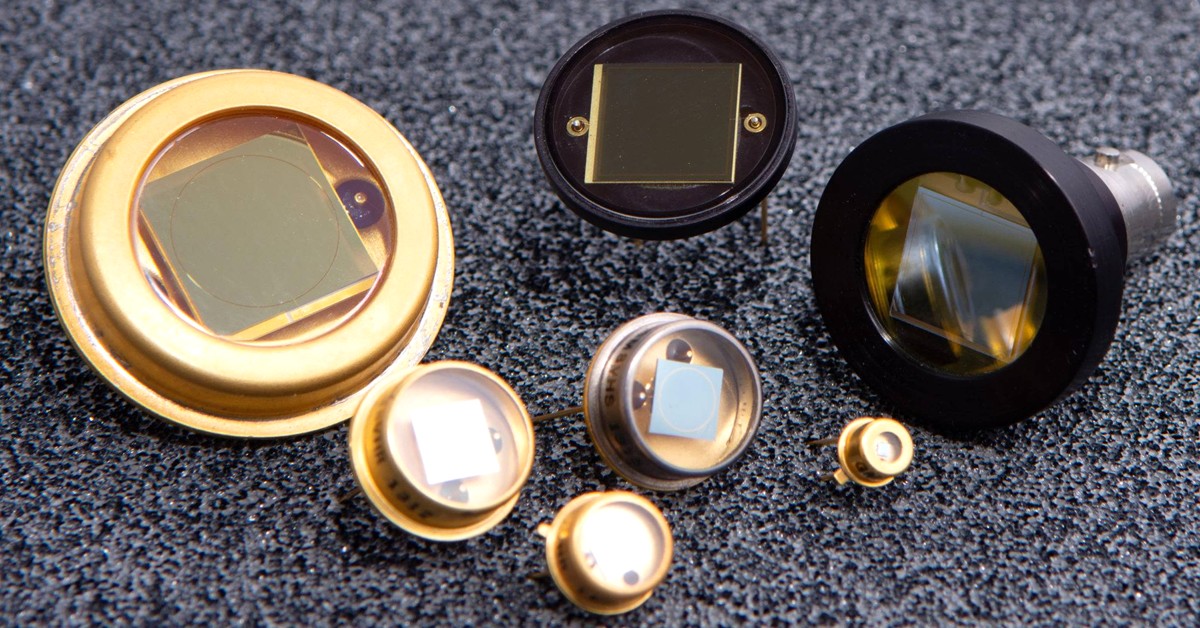
Our Buyer’s Guide
Choosing the right photodetector is critical for achieving accurate, reliable optical measurements. This guide explores key selection factors including wavelength range, responsivity, speed, noise, and packaging to help engineers match detector performance to specific applications across telecom, industrial, and scientific systems.
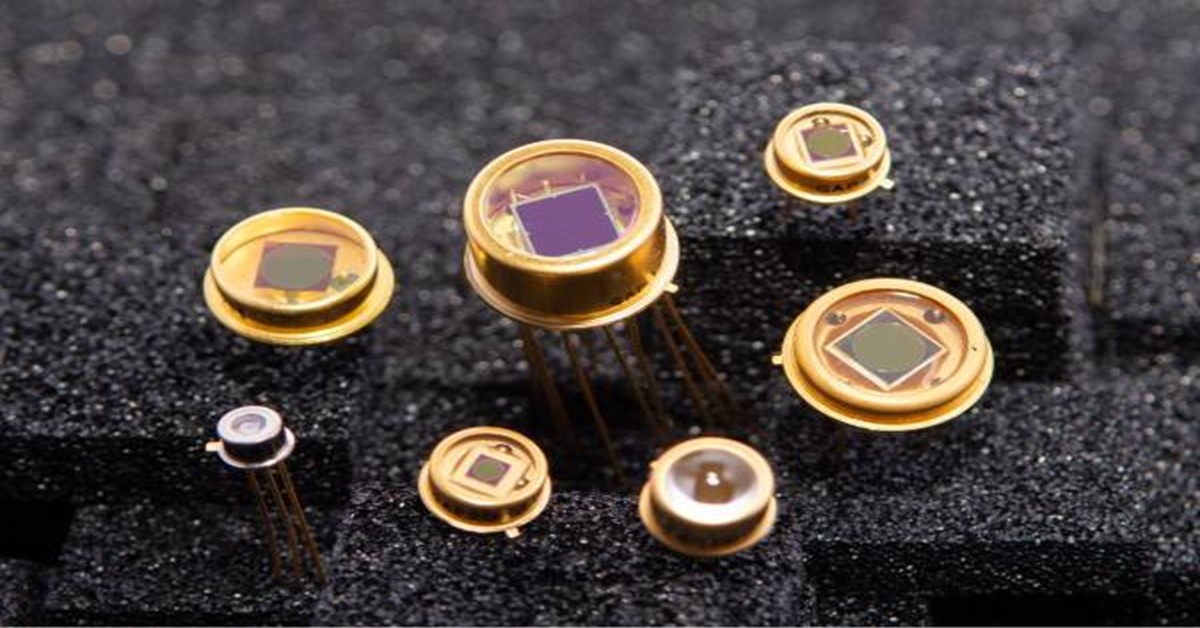
Our Photodetector Selector
Answer four questions about your application — wavelength range, response speed, signal strength, and beam tracking — and our Photodector Selector points you to the detector type best suited for your system. From there, a parameter reference table breaks down the datasheet values that matter most, including responsivity, dark current, bandwidth, and active area, so you understand not just which detector to choose but why. A trade-off section rounds it out by walking through the competing properties that every engineer has to balance when optimizing for performance, cost, and form factor.

