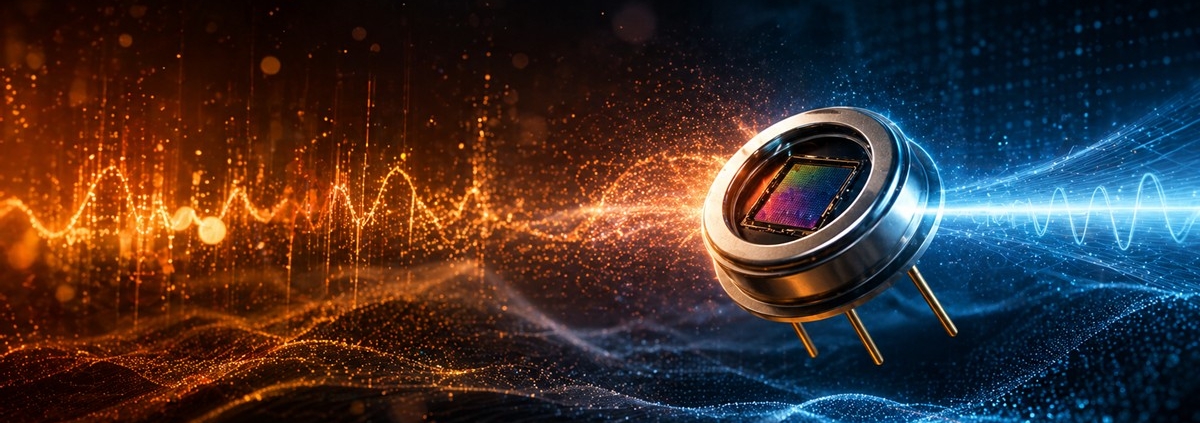

An Avalanche Photodiode is a highly sensitive semiconductor detector that converts light into electrical current and amplifies weak signals through avalanche multiplication. APDs provide higher gain than standard photodiodes, enabling detection of low-level optical signals in LiDAR, optical communications, sensing, and scientific instrumentation. GPD Optoelectronics produces high-performance APDs engineered for reliability, low noise, and demanding infrared applications.

Posts

Selecting a Photodiode Built to Outlast Your Aerospace Mission Main Graphic

Selecting a Photodiode Built to Outlast Your Aerospace Mission

Learn where near-infrared photodiodes fly in aerospace systems, which specs deserve a hard look, and why in-house fabrication, military-standard testing, and lot-level traceability matter for missions that must work the first time.

Introducing What is a Photodiode A Complete Guide Blog Post Graphic

Introducing What is a Photodiode: A Complete Guide

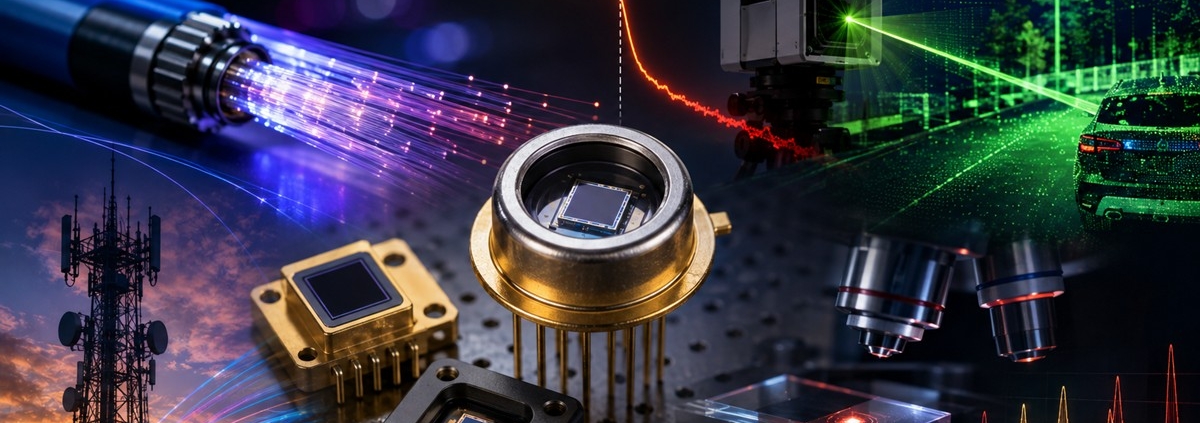
Read the blog post introducing our new What is a Photodiode? A Complete Guide covers operating modes, device types, key specifications, and material systems. Engineers new to detector selection will find a clear and practical starting point, along with links to relevant product pages and selection tools.

Picking the Right Photodiode for Your Wavelength Range

Picking the Right Photodiode for Your Wavelength Range

Silicon detectors lose effectiveness past 1000 nm, right where fiber optics, LiDAR, spectroscopy operate. See why InGaAs photodiodes fill that gap, what separates PIN from APD architectures, and how to choose the right detector for your system.

Why the Cheapest Photodetector Is Usually the Most Expensive One

Why the Cheapest Photodetector Is Usually the Most Expensive One

Choosing a photodetector isn’t just a spec-matching exercise. The wrong choice drives redesign cycles, calibration overhead, and supplier risk that never appear on a datasheet. Here’s how to evaluate detectors the way your product’s lifecycle actually demands.