
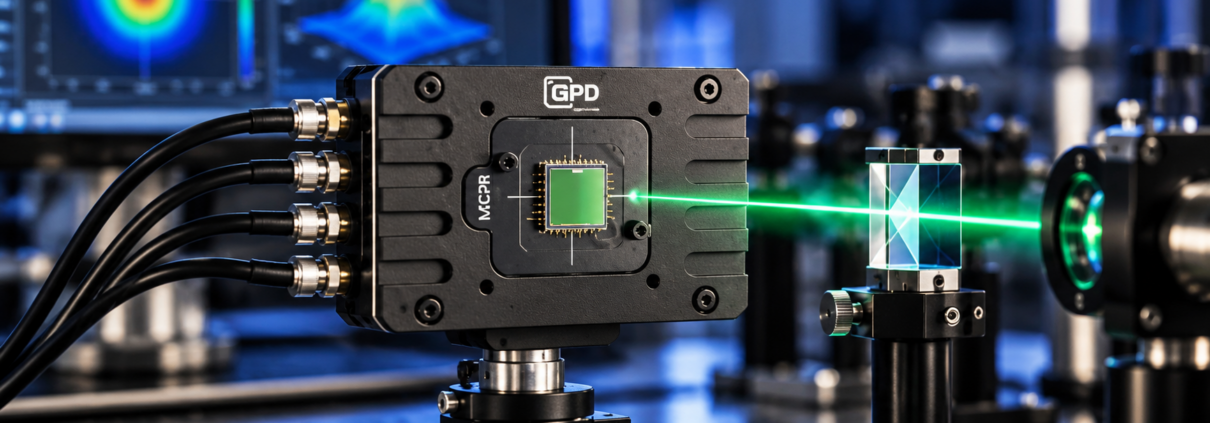
A Quadrant Photodiode is a position-sensitive photodetector divided into four independent sensing areas arranged in a 2×2 layout. By comparing the relative photocurrents from each quadrant, it can precisely determine the position, alignment, or movement of a light spot. Quadrant photodiodes are widely used in beam tracking, laser alignment, optical feedback systems, autofocus mechanisms, and vibration or displacement measurements where high speed and accuracy are required.

Posts

How the MCPR Development Kit Accelerates Photodiode System Design

How the MCPR Development Kit Accelerates Photodiode System Design

Building multi-channel readout electronics can stall a photodiode program for months. The MCPR Development Kit from GPD Optoelectronics delivers 8-channel, ultra-low-noise performance out of the box, helping engineering teams cut design time, reduce integration risk and reach real data in minutes.


Selecting a Photodiode Built to Outlast Your Aerospace Mission Main Graphic

Selecting a Photodiode Built to Outlast Your Aerospace Mission

Learn where near-infrared photodiodes fly in aerospace systems, which specs deserve a hard look, and why in-house fabrication, military-standard testing, and lot-level traceability matter for missions that must work the first time.

Introducing What is a Photodiode A Complete Guide Blog Post Graphic

Introducing What is a Photodiode: A Complete Guide

Read the blog post introducing our new What is a Photodiode? A Complete Guide covers operating modes, device types, key specifications, and material systems. Engineers new to detector selection will find a clear and practical starting point, along with links to relevant product pages and selection tools.