Every optical measurement system, from a fiber optic receiver to a laser rangefinder, comes down to the same basic problem: turning light into an electrical signal a circuit can read.
That conversion happens at a photodiode, a semiconductor device built around a p-n junction that generates a current proportional to the light striking it.
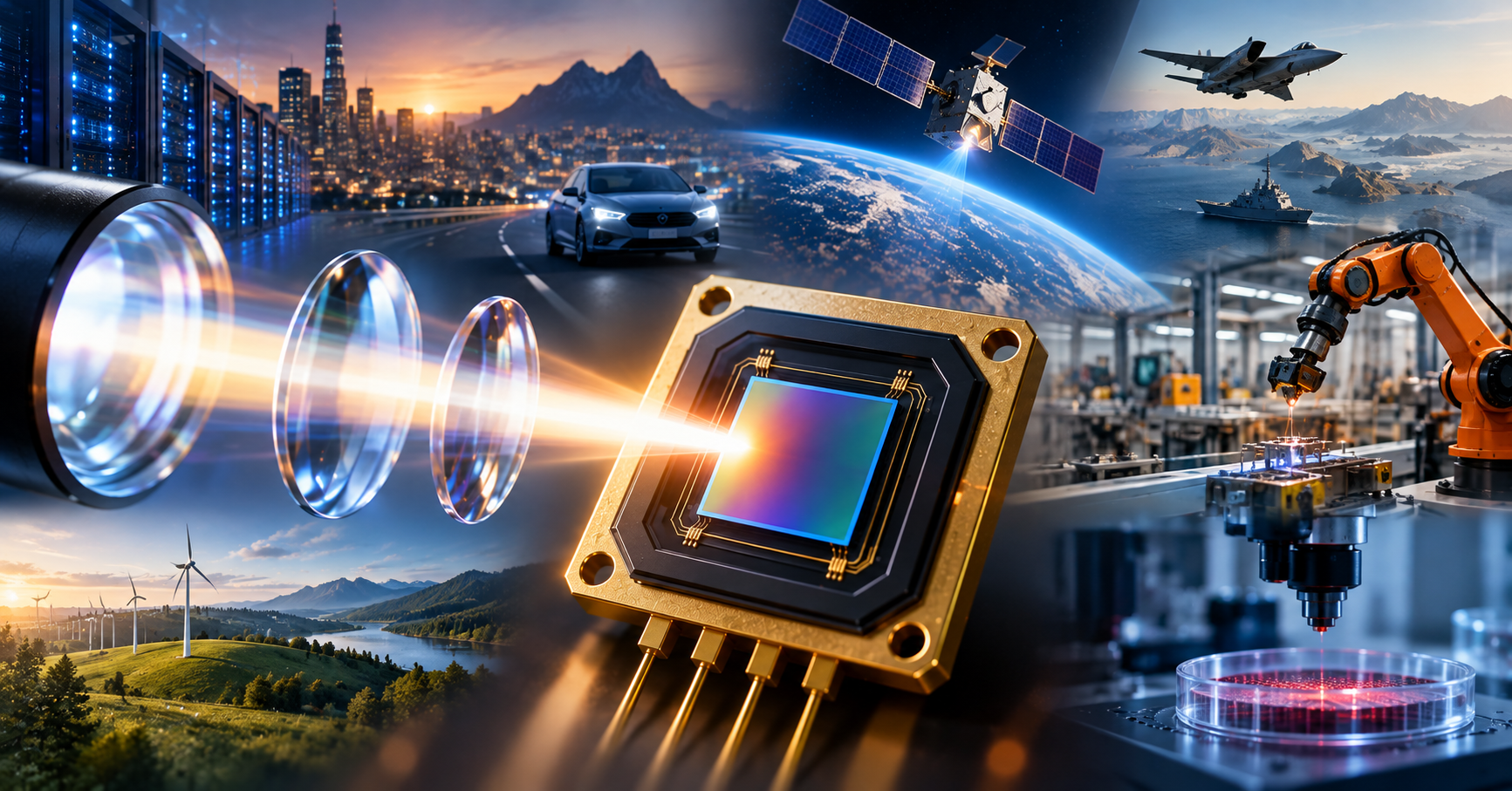
Getting that conversion right and picking the device that does it best for a given design is what our new resource page, What is a Photodiode? A Complete Guide is built to teach.
Here is a taste of what is inside.
Two operating modes, two different jobs. A photodiode can run in photovoltaic mode, generating a small voltage on its own with very low noise, or in photoconductive mode, applying a reverse bias that widens the depletion region and speeds up response time. The guide breaks down exactly when each mode earns its place in a design, and why most light-generated current originates in the depletion region.
Four architectures, four different tradeoffs. PIN photodiodes are the workhorse of telecom and industrial sensing. Avalanche photodiodes generate internal gain through avalanche multiplication, turning a single absorbed photon into a cascade of electron-hole pairs to detect extremely low light levels. Schottky photodiodes swap the p-n junction for a metal-semiconductor junction to reach shorter wavelengths and faster response times. This guide walks through where each one belongs and how phototransistors fit into the picture as a lower-cost, lower-speed alternative.
Position-sensing and specialty families most engineers never think to compare. Quadrant and tetralateral photodiodes track where a beam lands, not just how bright it is. Two-color detectors report two wavelengths from a single package. Low polarization-dependent loss InGaAs photodiodes hold their responsivity steady even as polarization drifts through a fiber link. The guide covers all four and explains the specific problem each one solves.
Material choice sets the boundaries before a single spec gets compared. Silicon covers the ultraviolet through the near infrared at the lowest cost. InGaAs extends into the shortwave infrared and anchors telecom wavelengths at 1310 nm and 1550 nm. Germanium reaches similar infrared territory at a lower price, trading off higher dark current and slower speed. The guide lays out exactly where each material’s usable range starts and stops.
The eight specifications that decide performance. Responsivity, dark current, noise equivalent power, bandwidth, quantum efficiency, junction capacitance, active area, and breakdown voltage all interact in ways a single headline number never captures. The guide explains what each one means in practice, and which ones matter most for a given application.
Read What is a Photodiode? A Complete Guide, as we walk you through all of it in depth, with direct links to the product families that match each device type and material system discussed along the way
https://www.gpd-ir.com/wp-content/uploads/2026/09/Introducing-What-is-a-Photodiode-A-Complete-Guide-Blog-Post-Graphic.png
907
1733
GPD Optoelectronics
https://www.gpd-ir.com/wp-content/uploads/2025/12/GPD-Logo-Transparent.png
GPD Optoelectronics2026-09-18 16:51:422026-09-18 16:55:15Introducing What is a Photodiode: A Complete Guide https://www.gpd-ir.com/wp-content/uploads/2026/08/Picking-the-Right-Photodiode-for-Your-Wavelength-Range.jpg
628
1200
GPD Optoelectronics
https://www.gpd-ir.com/wp-content/uploads/2025/12/GPD-Logo-Transparent.png
GPD Optoelectronics2026-08-28 11:46:432026-08-28 12:10:33Picking the Right Photodiode for Your Wavelength Range
https://www.gpd-ir.com/wp-content/uploads/2026/08/Picking-the-Right-Photodiode-for-Your-Wavelength-Range.jpg
628
1200
GPD Optoelectronics
https://www.gpd-ir.com/wp-content/uploads/2025/12/GPD-Logo-Transparent.png
GPD Optoelectronics2026-08-28 11:46:432026-08-28 12:10:33Picking the Right Photodiode for Your Wavelength Range https://www.gpd-ir.com/wp-content/uploads/2026/07/The-Photonics-Bottleneck-Nobodys-Talking-About-in-the-AI-Buildout-Graphic.jpg
628
1200
GPD Optoelectronics
https://www.gpd-ir.com/wp-content/uploads/2025/12/GPD-Logo-Transparent.png
GPD Optoelectronics2026-07-20 16:26:522026-08-28 11:53:18The Photonics Bottleneck Nobody’s Talking About in the AI Buildout
https://www.gpd-ir.com/wp-content/uploads/2026/07/The-Photonics-Bottleneck-Nobodys-Talking-About-in-the-AI-Buildout-Graphic.jpg
628
1200
GPD Optoelectronics
https://www.gpd-ir.com/wp-content/uploads/2025/12/GPD-Logo-Transparent.png
GPD Optoelectronics2026-07-20 16:26:522026-08-28 11:53:18The Photonics Bottleneck Nobody’s Talking About in the AI Buildout https://www.gpd-ir.com/wp-content/uploads/2026/07/Our-New-Photodetector-Selector-Graphic.jpg
628
1200
GPD Optoelectronics
https://www.gpd-ir.com/wp-content/uploads/2025/12/GPD-Logo-Transparent.png
GPD Optoelectronics2026-05-12 18:07:002026-08-28 11:54:39Our New Photodetector Selector: A Powerful Tool for Engineers
https://www.gpd-ir.com/wp-content/uploads/2026/07/Our-New-Photodetector-Selector-Graphic.jpg
628
1200
GPD Optoelectronics
https://www.gpd-ir.com/wp-content/uploads/2025/12/GPD-Logo-Transparent.png
GPD Optoelectronics2026-05-12 18:07:002026-08-28 11:54:39Our New Photodetector Selector: A Powerful Tool for Engineers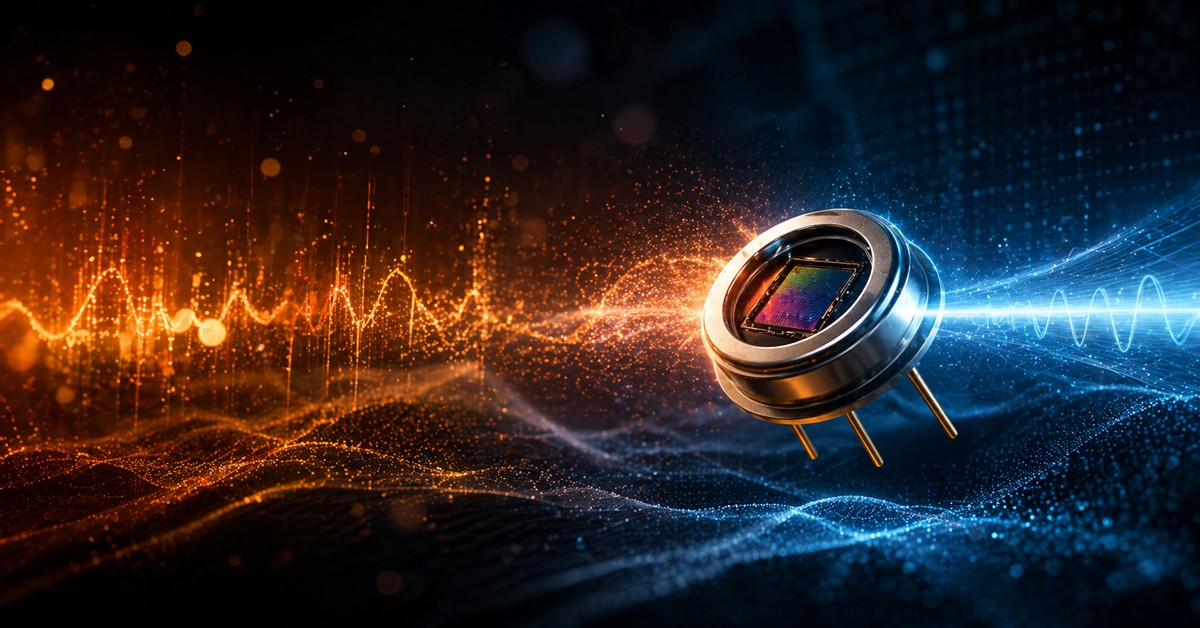 https://www.gpd-ir.com/wp-content/uploads/2026/05/Why-the-Cheapest-Photodetector-Is-Usually-the-Most-Expensive-One.jpg
628
1200
GPD Optoelectronics
https://www.gpd-ir.com/wp-content/uploads/2025/12/GPD-Logo-Transparent.png
GPD Optoelectronics2026-05-06 10:06:182026-05-07 14:03:37Why the Cheapest Photodetector Is Usually the Most Expensive One
https://www.gpd-ir.com/wp-content/uploads/2026/05/Why-the-Cheapest-Photodetector-Is-Usually-the-Most-Expensive-One.jpg
628
1200
GPD Optoelectronics
https://www.gpd-ir.com/wp-content/uploads/2025/12/GPD-Logo-Transparent.png
GPD Optoelectronics2026-05-06 10:06:182026-05-07 14:03:37Why the Cheapest Photodetector Is Usually the Most Expensive One https://www.gpd-ir.com/wp-content/uploads/2026/03/Satellite-2026-Graphic.jpg
628
1200
GPD Optoelectronics
https://www.gpd-ir.com/wp-content/uploads/2025/12/GPD-Logo-Transparent.png
GPD Optoelectronics2026-03-01 19:18:102026-08-17 14:31:58Satellite 2026 in Washington, D.C., March 23-26
https://www.gpd-ir.com/wp-content/uploads/2026/03/Satellite-2026-Graphic.jpg
628
1200
GPD Optoelectronics
https://www.gpd-ir.com/wp-content/uploads/2025/12/GPD-Logo-Transparent.png
GPD Optoelectronics2026-03-01 19:18:102026-08-17 14:31:58Satellite 2026 in Washington, D.C., March 23-26 https://www.gpd-ir.com/wp-content/uploads/2026/01/SPIE-Photonics-West-2026.jpg
628
1200
GPD Optoelectronics
https://www.gpd-ir.com/wp-content/uploads/2025/12/GPD-Logo-Transparent.png
GPD Optoelectronics2026-01-22 23:52:102026-04-02 09:24:26Photonics West 2026: San Francisco, January 20-22
https://www.gpd-ir.com/wp-content/uploads/2026/01/SPIE-Photonics-West-2026.jpg
628
1200
GPD Optoelectronics
https://www.gpd-ir.com/wp-content/uploads/2025/12/GPD-Logo-Transparent.png
GPD Optoelectronics2026-01-22 23:52:102026-04-02 09:24:26Photonics West 2026: San Francisco, January 20-22 https://www.gpd-ir.com/wp-content/uploads/2025/12/Digikey-Graphic-1.jpg
628
1200
GPD Optoelectronics
https://www.gpd-ir.com/wp-content/uploads/2025/12/GPD-Logo-Transparent.png
GPD Optoelectronics2025-12-19 09:00:212026-08-17 14:42:33GPD Optoelectronics Announces Global Availability of Photodiodes on DigiKey
https://www.gpd-ir.com/wp-content/uploads/2025/12/Digikey-Graphic-1.jpg
628
1200
GPD Optoelectronics
https://www.gpd-ir.com/wp-content/uploads/2025/12/GPD-Logo-Transparent.png
GPD Optoelectronics2025-12-19 09:00:212026-08-17 14:42:33GPD Optoelectronics Announces Global Availability of Photodiodes on DigiKey https://www.gpd-ir.com/wp-content/uploads/2025/11/GPD-Optoelectronics-Announces-Launch-of-Multi-Cell-Photoreceiver-Development-Kit-Ahead-of-Space-Tech-Expo-Europe-202.jpg
628
1200
GPD Optoelectronics
https://www.gpd-ir.com/wp-content/uploads/2025/12/GPD-Logo-Transparent.png
GPD Optoelectronics2025-11-06 09:00:412026-04-01 16:12:09GPD Optoelectronics Announces Launch of Multi-Cell Photoreceiver Development Kit Ahead of Space Tech Expo Europe 2025
https://www.gpd-ir.com/wp-content/uploads/2025/11/GPD-Optoelectronics-Announces-Launch-of-Multi-Cell-Photoreceiver-Development-Kit-Ahead-of-Space-Tech-Expo-Europe-202.jpg
628
1200
GPD Optoelectronics
https://www.gpd-ir.com/wp-content/uploads/2025/12/GPD-Logo-Transparent.png
GPD Optoelectronics2025-11-06 09:00:412026-04-01 16:12:09GPD Optoelectronics Announces Launch of Multi-Cell Photoreceiver Development Kit Ahead of Space Tech Expo Europe 2025 https://www.gpd-ir.com/wp-content/uploads/2026/03/GPD-Optoelectronics-Corp.-Awarded-14.5M-Contract-to-Advance-Rugged-Optical-Receiver-Technology.jpg
628
1200
GPD Optoelectronics
https://www.gpd-ir.com/wp-content/uploads/2025/12/GPD-Logo-Transparent.png
GPD Optoelectronics2025-10-23 09:05:202026-04-02 09:12:36GPD Optoelectronics Corp. Awarded $14.5M Contract to Advance Rugged Optical Receiver Technology
https://www.gpd-ir.com/wp-content/uploads/2026/03/GPD-Optoelectronics-Corp.-Awarded-14.5M-Contract-to-Advance-Rugged-Optical-Receiver-Technology.jpg
628
1200
GPD Optoelectronics
https://www.gpd-ir.com/wp-content/uploads/2025/12/GPD-Logo-Transparent.png
GPD Optoelectronics2025-10-23 09:05:202026-04-02 09:12:36GPD Optoelectronics Corp. Awarded $14.5M Contract to Advance Rugged Optical Receiver Technology